
Herniated Discs in Varese: What to Know and How to Move
A herniated disc is a medical diagnosis made through clinical evaluation and, where appropriate, imaging; we do not make that diagnosis. Many disc herniations cause no symptoms. If lower-back pain travels down a leg, a chiropractor can assess movement and neurological warning signs, adapt care when suitable or refer you for medical evaluation.
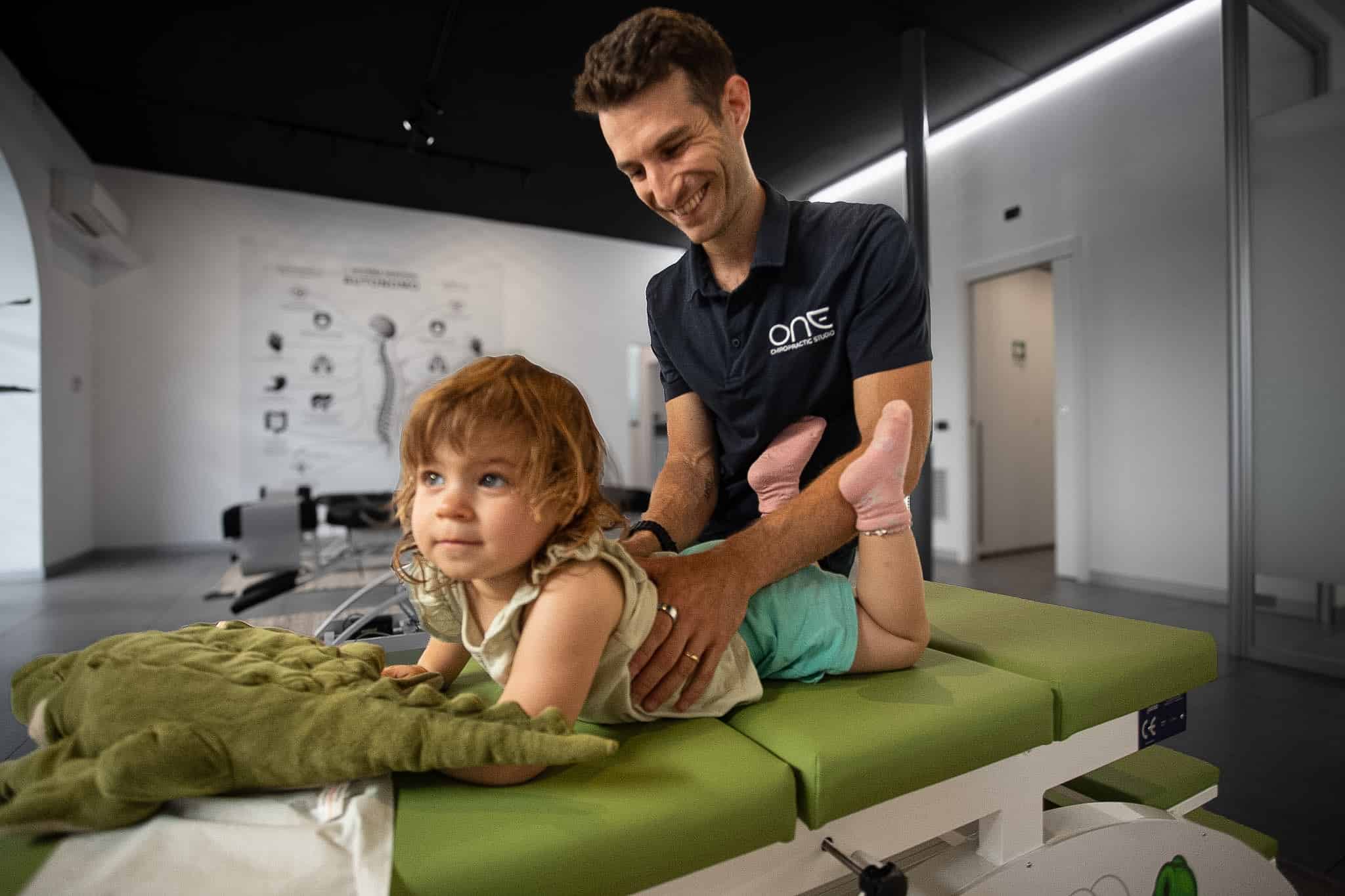
You have been sitting at your desk for three hours when a sharp feeling begins in your lower back and travels down a leg. When you stand, your foot briefly feels weaker than usual. An online search leads to the words “herniated disc”, and you may worry about surgery, lifting your child or returning to sport. Avoid diagnosing yourself from search results. Disc herniation is real, but online descriptions can be more frightening than the full clinical picture warrants. Here we explain what a herniated disc is, what it is not, and the limits of what ONE Chiropractic Studio Varese may assess. Related links: ONE Chiropractic Studio Varese.
Contents
• What Exactly Is a Herniated Disc? On this page: What Exactly Is a Herniated Disc?.
• Why Do Many Herniated Discs Cause No Symptoms? On this page: Why Do Many Herniated Discs Cause No Symptoms?.
• How Does a Symptomatic Herniated Disc Present? On this page: How Does a Symptomatic Herniated Disc Present?.
• Sciatica: A Symptom, Not Always the Same Cause On this page: Sciatica: A Symptom, Not Always the Same Cause.
• Natural History: Many Disc Herniations Improve Over Time On this page: Natural History: Many Disc Herniations Improve Over Time.
• What a Chiropractor Assesses and When to Refer On this page: What a Chiropractor Assesses and When to Refer.
• What chiropractic cannot do On this page: What Chiropractic Cannot Do: Clearing Up a Common Myth.
• Movement as an Ally On this page: Movement as an Ally.
• When immediate medical care is needed On this page: When It Is a Medical Emergency: Warning Signs Not to Ignore.
• How Much Does It Cost and How Do You Book in Varese? On this page: How Much Does It Cost and How Do You Book in Varese?.
• At a Glance On this page: At a Glance.
• Frequently Asked Questions On this page: Frequently Asked Questions.
What Exactly Is a Herniated Disc?
Between adjacent vertebrae is a disc with a tough fibrous outer ring and a softer centre. It absorbs load while allowing movement. When the outer ring weakens, disc material may move outward. Terms describe different shapes and degrees of displacement: a protrusion is a contained bulge, while a herniation means disc material extends farther beyond the normal boundary, sometimes through a tear. Extrusion or sequestration may describe more advanced changes when material extends or separates. Imaging can identify structural differences, but these findings alone do not determine how much pain a person will feel. Symptoms and examination matter as much as scan terminology.
Why Do Many Herniated Discs Cause No Symptoms?
A finding on an MRI does not automatically mean that the disc is causing pain. Imaging studies have found disc bulges and herniations in people who have no back symptoms at all. The body can sometimes accommodate structural changes without significant pain or neurological symptoms. MRI reports should therefore be interpreted alongside the person’s history, neurological examination and actual symptoms. A scan is a picture of anatomy at one moment, not proof by itself of the cause of a person’s discomfort.
How Does a Symptomatic Herniated Disc Present?
A symptomatic lumbar herniation may cause low-back pain that remains local or travels through the buttock and down the leg, sometimes reaching the foot. Possible symptoms include discomfort during prolonged sitting, tingling or numbness along part of the leg and, in some cases, weakness such as difficulty lifting the front of the foot while walking. Not everyone experiences all of these, and severity varies widely. Radiating leg pain is often described as sciatica, which deserves a separate explanation.
Sciatica: A Symptom, Not Always the Same Cause
Sciatica describes pain along the course of the sciatic nerve from the lower back or buttock into the leg. It is a symptom pattern, not a standalone explanation of its cause. A lumbar disc herniation irritating a nerve root is one possible cause, sometimes producing pain, tingling or numbness below the knee. Other conditions may produce similar symptoms, including deep-gluteal nerve irritation, narrowing of the spinal canal or an irritated sacroiliac region. Runners and other athletes can also have overlapping muscular and joint issues; see our guide for runners. When someone comes to us with radiating pain, the important question is where symptoms originate. We consider where pain travels, changes in strength, sensation or reflexes, and how symptoms respond to movement and position. If the medical picture suggests significant nerve compression or progressive neurological loss, the appropriate next step is medical or specialist assessment, not routine chiropractic care. Related links: Chiropractic for Runners in Varese: Injuries and Prevention.
Natural History: Many Disc Herniations Improve Over Time
Many people with disc herniation experience improvement over time, sometimes without surgery. In some cases the body can gradually resorb part of the displaced disc material, while pain and nerve irritation settle. The course is different for each person, and no improvement can be guaranteed. Medical follow-up is important where a diagnosis has been established, especially if neurological symptoms change. A herniated-disc diagnosis does not automatically mean that surgery or permanent disability is inevitable.

Can I Have a Chiropractic Adjustment if I Have a Herniated Disc?
There is no automatic yes-or-no answer. Before considering manual care, we review the history, previous investigations and any signs of neurological risk. If care may be appropriate, techniques are adapted: gentler contact, work away from the affected segment or attention to the hips and pelvis. Sometimes we coordinate with clinicians already involved. If examination suggests significant risk or a condition outside our scope, we refer the patient to a doctor or specialist. We do not promise to “put the disc back”. A manual technique cannot physically reposition herniated material. What we can offer is an honest assessment of current function and movement.
What a Chiropractor Assesses and When to Refer
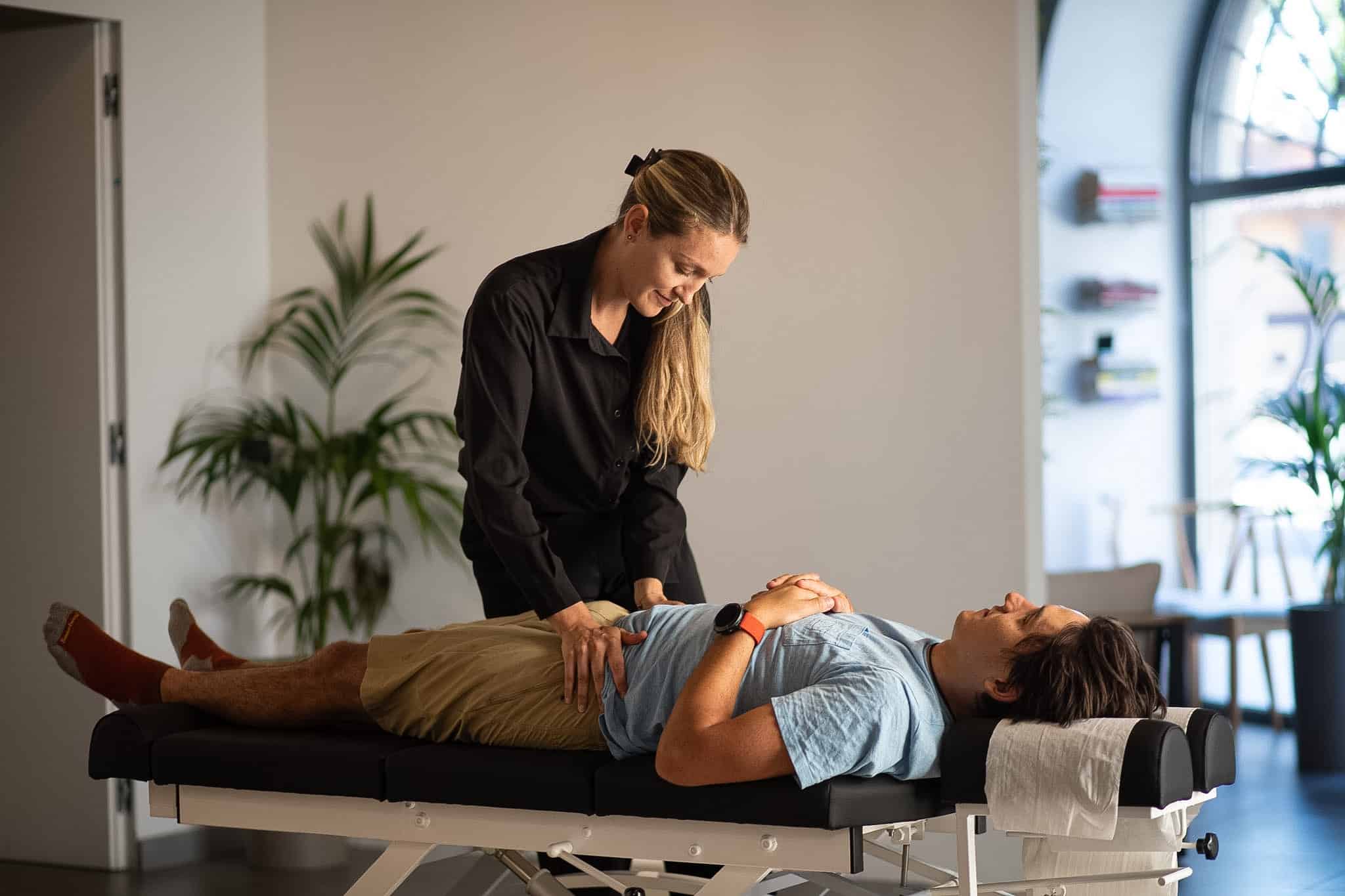
We begin with your history: when pain started, what aggravates or relieves it and whether imaging or medical evaluation has already been completed. A basic neurological screening can include strength, sensation and leg reflexes to look for signs of nerve-root involvement. Worsening weakness, expanding numbness or other progressive neurological findings require medical or specialist assessment. Further imaging or surgical advice may be needed, and chiropractic care should be deferred or adapted according to the medical assessment. If symptoms are less concerning, such as radiating pain without progressive neurological loss, an individualized conservative-care discussion may be possible, with reassessment if symptoms change. We begin with these considerations whether a patient arrives with an existing diagnosis or without an imaging report.
What Chiropractic Cannot Do: Clearing Up a Common Myth
Chiropractic cannot push a herniated disc back into place, realign displaced disc tissue or cause it to be resorbed through manual adjustments. No manual therapy can physically reposition material that has emerged from a disc. What chiropractic may do, if suitable, is assess movement of the spine, hips and pelvis and consider measures to address movement restrictions or compensatory load. That is work on movement and function, not the structure of the disc itself. We also do not diagnose disc herniations. That requires clinical medical assessment and imaging when appropriate. When someone has radiating pain or suspects a disc issue, we assess movement and warning signs and refer for medical diagnosis when indicated.
Movement as an Ally
When the back hurts and the leg tingles, the instinct is often to stop moving entirely. In many uncomplicated cases prolonged bed rest does not speed recovery and may make activity harder. Walking as tolerated and maintaining suitably adjusted daily activities may be helpful. People who work at desks may benefit from changing position more often, taking breaks and paying attention to lifting technique. Comfortable mobility of the hips, pelvis and upper back can also support movement during the day; see our joint-mobility guide. Managing activity over time may matter more than one isolated intervention. For related issues, see our guides to recurring back pain, neck pain and headaches in Varese. Related links: Chiropractor Near Lugano and Varese · Joint Mobility in Sport: Chiropractic in Varese · Back Pain in Varese: Causes, Relief and When to Act · Neck Pain in Varese: Causes, Relief and When to Act · Headaches in Varese: How They May Relate to the Neck.
When It Is a Medical Emergency: Warning Signs Not to Ignore
Some symptoms require urgent medical evaluation, not a chiropractic appointment. Progressive or sudden leg weakness; numbness in the saddle area around the genitals, buttocks or inner thighs; and difficulty controlling the bladder or bowel can indicate serious nerve compression, including cauda equina syndrome, and require immediate emergency assessment. Pain that worsens relentlessly, does not change with position or fails to respond to treatment also warrants medical review. Fever with back pain may suggest infection and should never be ignored. If you notice any of these signs, seek medical care promptly. Chiropractic treatment must never delay emergency evaluation.
How Much Does It Cost and How Do You Book in Varese?
The first consultation costs €90 and lasts around 45 minutes, including history, basic neurological screening and, only if suitable, an initial intervention. Follow-up appointments are €70. The original clinic policy provides a free first consultation if the practitioner determines the case is outside their scope. No medical referral is needed for booking, but bring any existing MRI report or medical assessment for context. You can book online or call +39 344 6313253. The clinic is at Via Maria Virginia Staurenghi 36 in Varese, with Autosilo Sempione parking nearby.
At a Glance
What We Know
Herniated discs are medical findings assessed through clinical evaluation and, where needed, imaging. Some cause no symptoms, and many improve over time without surgery.
What We Do Not Do
We do not diagnose herniated discs or claim to reposition or resorb displaced disc material manually. Significant nerve-compression signs require a doctor or specialist.
Getting Started in Varese
Initial consultation around 45 minutes, €90, with basic neurological screening; follow-ups €70. Via Maria Virginia Staurenghi 36, Varese, near Autosilo Sempione.
Your First Visit: What to Expect
1
Full Consultation
We review your history, health goals and lifestyle to understand the situation. The first consultation lasts about 45 minutes.
2
Spinal Assessment
We assess posture, movement and nervous-system function where relevant to the symptoms and referral risks.
3
Personalized Plan
If appropriate, a gentle initial adjustment and an individualized plan may be discussed.
Frequently Asked Questions

Written by Francesco Ferrero
Doctor of Chiropractic · AIC Member · Bachelor of Chiropractic, New Zealand College of Chiropractic (2016) · Certified in Network Spinal. Originally from Turin, a former competitive snowboarder and ONE Chiropractic Studio co-founder, Francesco regularly sees people in Varese and the province with lower-back pain, sciatica and existing medical diagnoses of disc herniation. Last updated: 7 September 2026. Meet the team. Related links: Meet the Varese Chiropractic Team.
ONE Chiropractic Studio Varese
Via Maria Virginia Staurenghi 36, 21100 Varese VA, Italy Related links: Via Maria Virginia Staurenghi 36, 21100 Varese VA, Italy.
+39 3446313253 Related links: Call the clinic.
[email protected] Related links: Email the clinic.
Monday 15:30–19:00
Tuesday 08:30–19:00
Wednesday 08:30–19:00
Thursday 08:30–19:00
Parking: Autosilo Sempione nearby · Instagram · Back to Chiropractor in Varese Related links: Instagram · ONE Chiropractic Studio Varese.